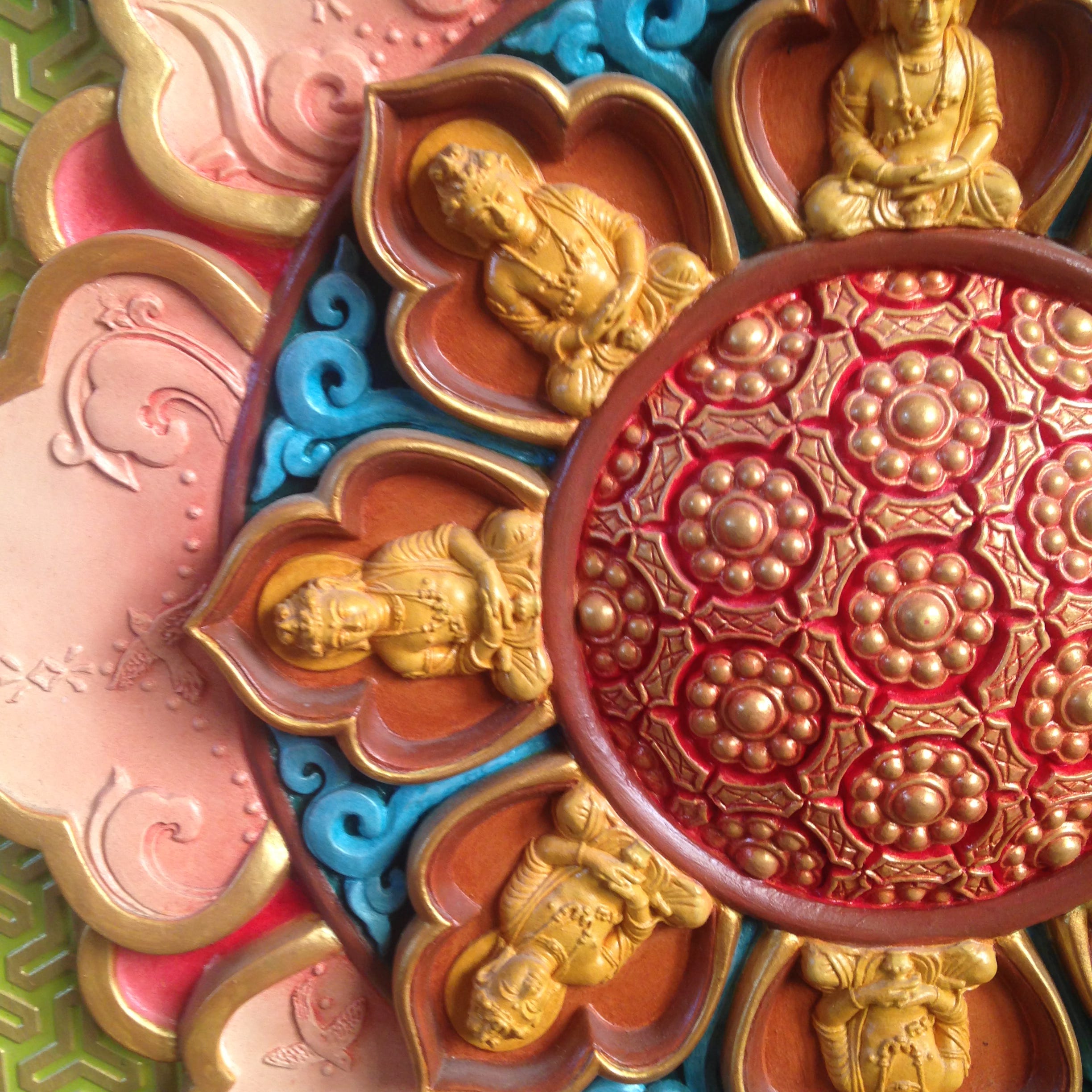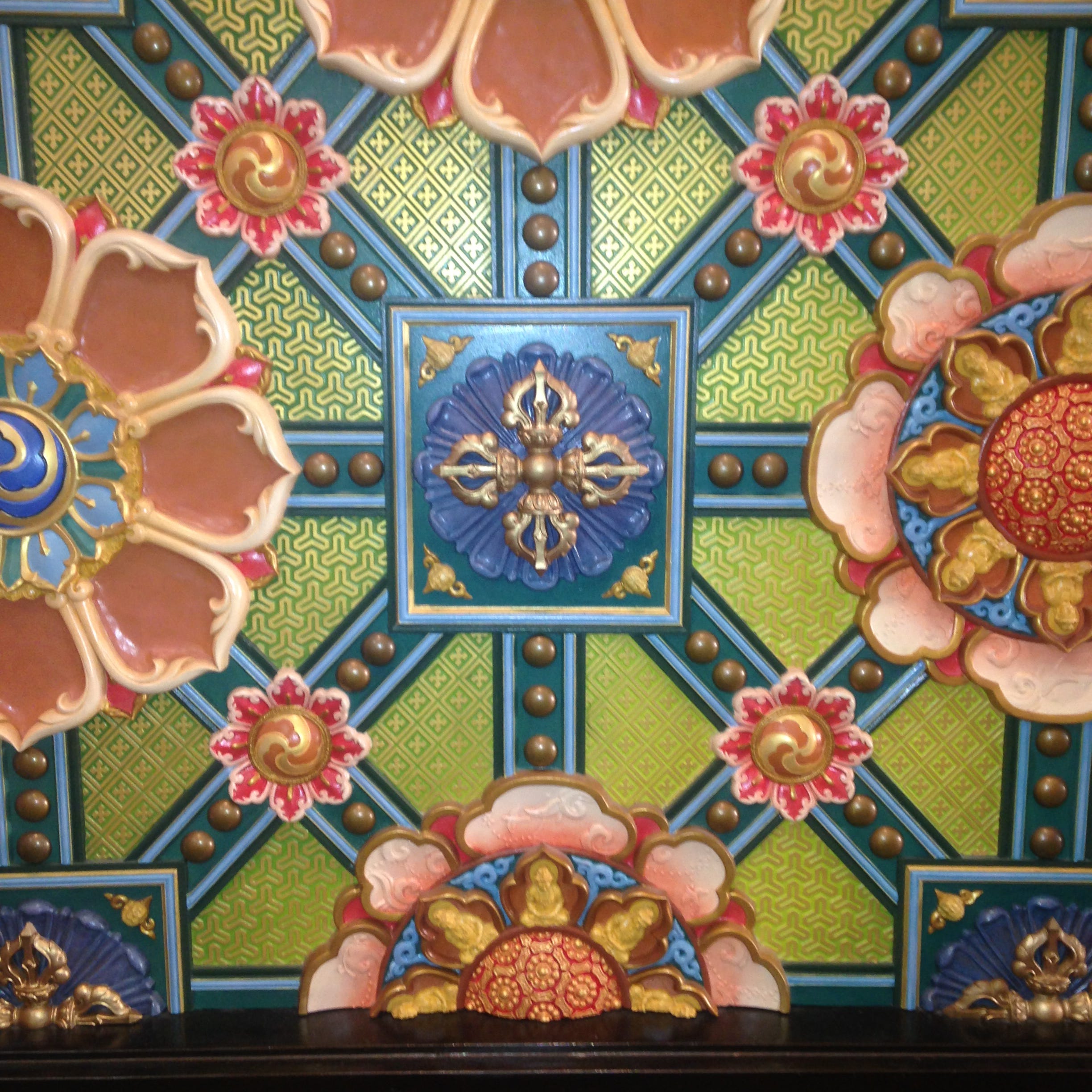
Years ago, shortly after 9/11, I very suddenly left my marriage, my apartment, my job, my entire NYC life, and my dog--oh, my dog!--to go live at a Buddhist retreat center in the Rocky Mountains. I felt it was essential that I dismantle my material life and take steps to really learn and understand and embody how to be a good human (rather than a good consumer, or a good capitalist, or a good wife as defined by the patriarchy.) I was already a meditation practitioner and a yogi at that point in time, and while I was not yet officially Buddhist (as in taking the vows), I knew that the Buddhadharma was going to be my refuge and my path. There, at the dharma center, I took a work-study job painting auspicious symbols that would eventually be mounted inside the Great Stupa of Dharmakaya, which was then still under construction. I had no sense, back then, of the auspiciousness of taking even a small part in the offering of a stupa. I had no sense of what it meant to accumulate merit, or to dedicate the merit, or anything like that. That was all to come. In the meantime, I was just a heartbroken, deluded ex-materialist New Yorker suffering from confusion and full and abject despair. And so, my despair and I grabbed a backpack, hopped on a plane, and re-planted ourselves in Colorado, where we lived for about nine months in a tent.
It’s a long story (actually, it’s a book, and I joke that the title will be In Tents--which it won’t be, despite the great pun) but I’m writing about it today because recently I’ve felt inspired to work with mandala art again--giant outdoor nature mandalas, working with nature’s auspicious symbols. And when a friend reached out through social media to ask if I would consider leading a workshop or retreat in nature mandalas, my first thought was to decline the invitation, because I felt I had no formal training in this practice (at least not in any theoretical and/or Andy Goldsworthy kind of way), and because so much of my work is 100% intuitive, and how can you teach that, given that our individual relationships to our own intuitions are so personal and relative?
But anyway, my friend’s invitation got me thinking about the times in my life I’ve gravitated toward mandalas, which helped me realize that a) I actually do have some formal training in the form (see below) and b) I always seem to turn to the mandala-making practice when I am in a particular form of despair. Feelings of despair--whether it is an inherited Irish ancestral thing or not--can tend to make my thoughts disorganized (or maybe it’s the disorganized “style” that leads to despair?) and there is something about working with sacred geometry that helps that aspect of self get re-organized.
Whatever the reason. I appreciate the intuition that guides me there, and everywhere, as needed. Read on…
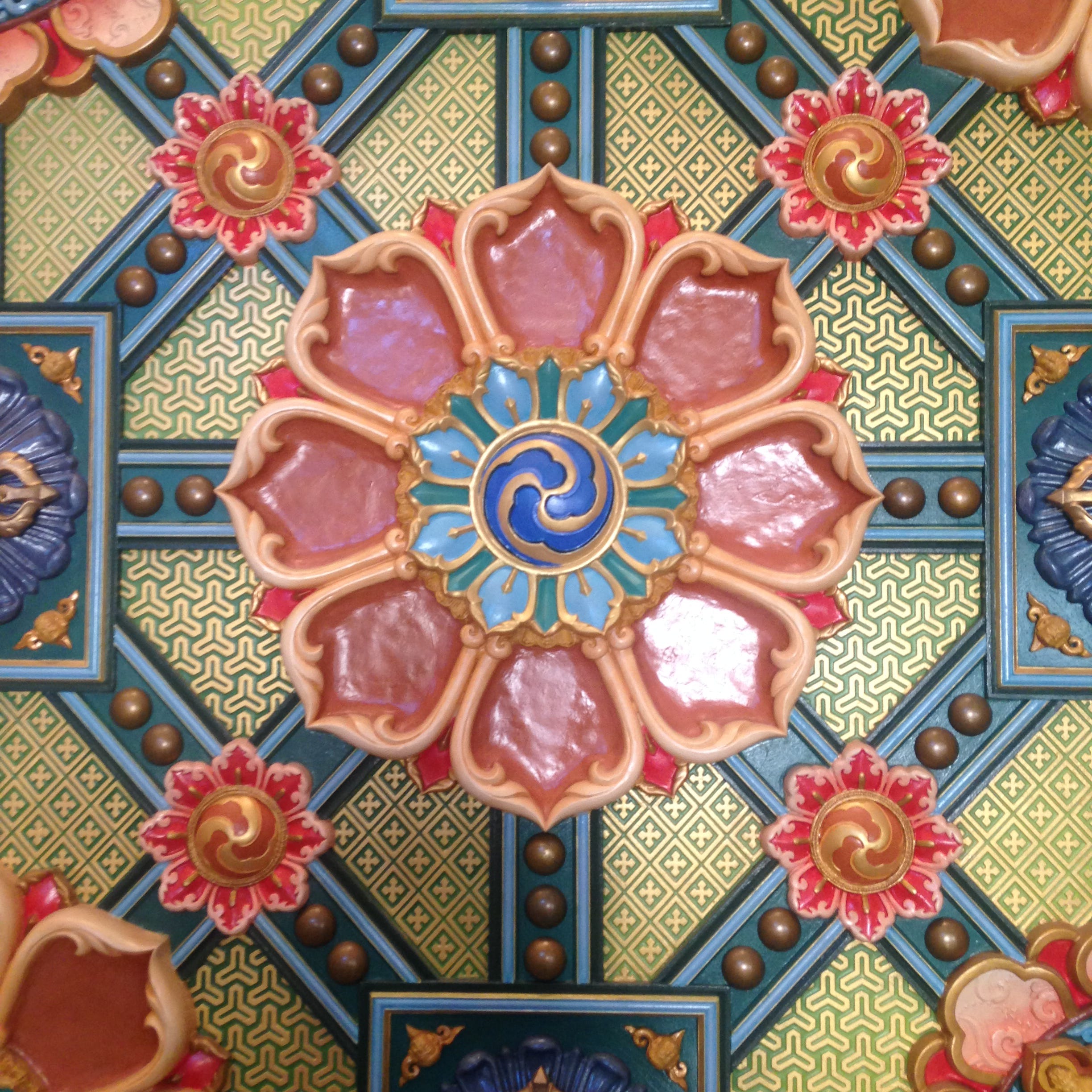
I was guided to that dharma center twenty years ago, for sure (another long story). There, my fellow lost-soul work-study residents and I participated in all the daily practices of the dharma community (ie: morning meditations, mantra recitations, sadhanas, dharma teachings) and dedicated a few hours each day to our work departments. The stupa artisans and I worked in a small studio shed next to the stupa, where the master artist--always kind, always holding vast visions in his good mind, always wearing an apron coated in dust-- would cast the plaster molds and give us instruction as to how to mix the colors and paint the dry casts (called tsa-tsas). It was like a 3-D form of paint-by-numbers and I loved it. It seemed like an absolutely perfect thing to do in my current situation (which, in reality, included homelessness, money-lessness, husband-lessness, dog-lessness--dog-less!--joblessness, happiness-lessness, etc). I had emptied myself of myself (and I now realize I do that a lot, and it’s actually not a good thing, on any practical or spiritual level. But I digress). There was just something so constructive about painting those molds so mindfully, especially after having initiated so much destruction to my domestic construct back in NYC. Each tsa-tsa or cast that we painted was about 3x3 inches and we worked on each separately, leaving it to the master artist to assemble them all into the larger compositions (which, as I already mentioned, would eventually be installed on the walls of the first floor of the stupa, long after I had departed.) I liked not knowing the end result; not knowing The Big Picture. It’s as though my mind was not even ready for that; plus, none of my Big Pictures had really worked out. And so I took on Beginner’s Mind, again and again, and that in itself became a daily cleanse, an internal cleanse of habituated thoughts.. As we worked, my fellow artisans and I talked--sparsely but meaningfully--about life-at-the-dharma-center things like the meanings of that day’s slogan (part of our ongoing Lojong practice), or yesterday evening’s sweat lodge, or the benefits of working with the Five Wisdom Energies (better than psychedelics is all I am saying. Says the person who, back in 2002, had never yet taken any psychedelics. But if you are reading between the lines, you might deduce that, since then, I have. And that there is still little that compares to the Wisdom Energies practice. But I digress again. As I said, this all amounts to a book..)
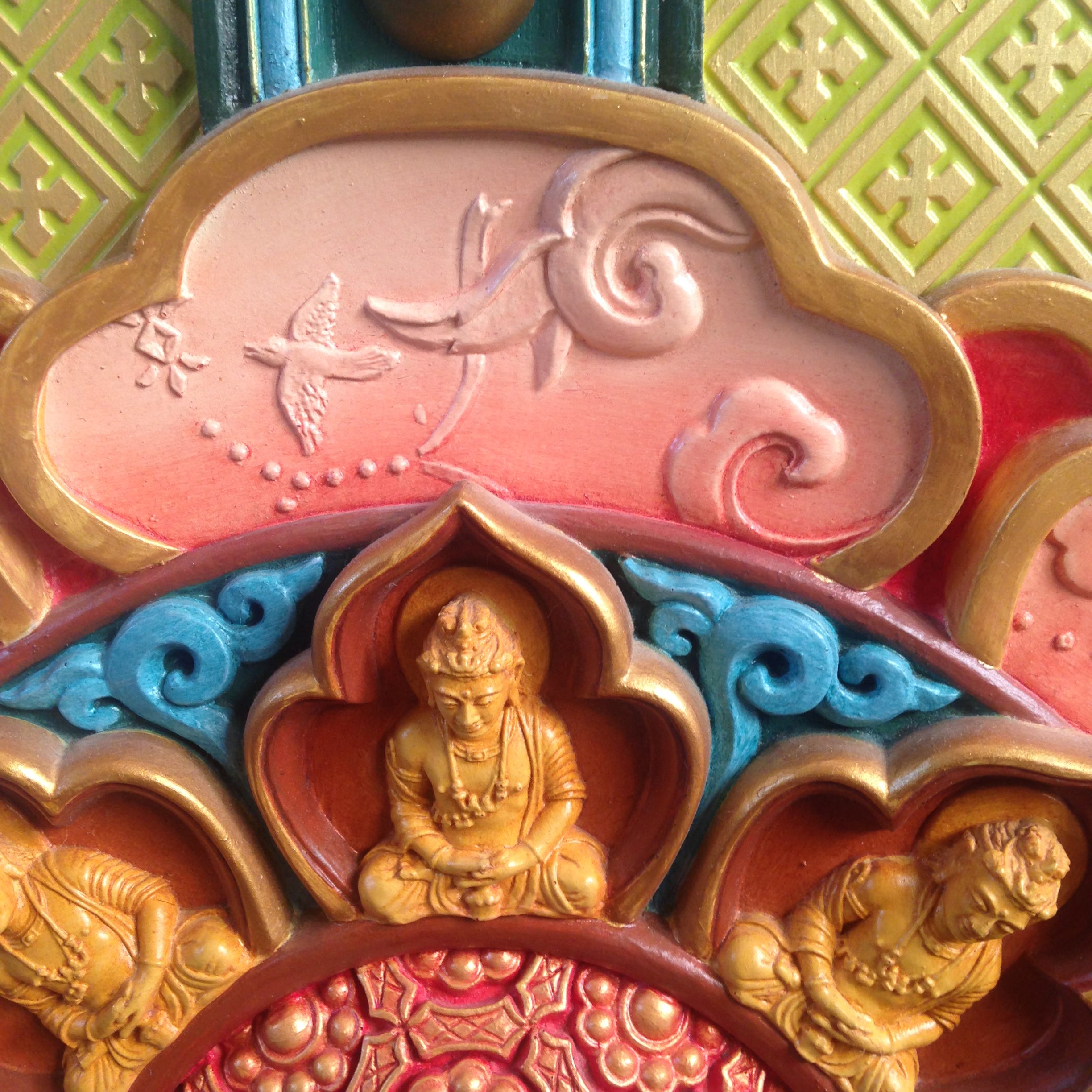
Anyway, I stayed at the dharma center for many months. I took refuge vows, and then Bodhisattva vows. I met great, great female masters, including Ani Pema Chodron and Mindrolling Jetsün Khandro Rinpoche. I cultivated relationships to things like peace and quiet and sunrise. I studied Zen archery, ikebana, mindful tea-drinking, and the preliminary stages of tangkha painting. I exchanged infrequent emails with my husband--infrequent because those were the days of dial-up internet, and the whole campus of a few hundred volunteers shared one dusty old Dell desktop for said dial-up service, and these were also the days of seriously no cell phone service in the Rockies. Suffice to say, my contact with the outside world was limited. Despite that, I wrote and submitted a non-fiction book proposal and ended up getting a two-book deal with Random House. I broke through my fear of singing in front of other people. I made great friends--including the center’s dharma-dog. I painted lots and lots of tiny plaster Buddhas, and tiny birds in flight, hoping that my own heart could some day once again take flight in such a pure and free way. I cried every day: sometimes in joy, sometimes with an ancient longing. And by the time I left (to take a writing residency in Woodstock, NY) I did feel that--through the guidance of the Noble Eightfold Path--I did have a better sense of how to be a good human. Of what to aspire to. I was still, of course, ensnared by the material world, but I’d hoped I was in a better position to try it all again. (Not realizing, of course, that we cannot succeed at samsara, but willing to enjoy the attempt).